

Technology
Authenticity, Regeneration, and the Human Trace in AI Creativity
Authenticity, Regeneration, and the Human Trace in AI Creativity
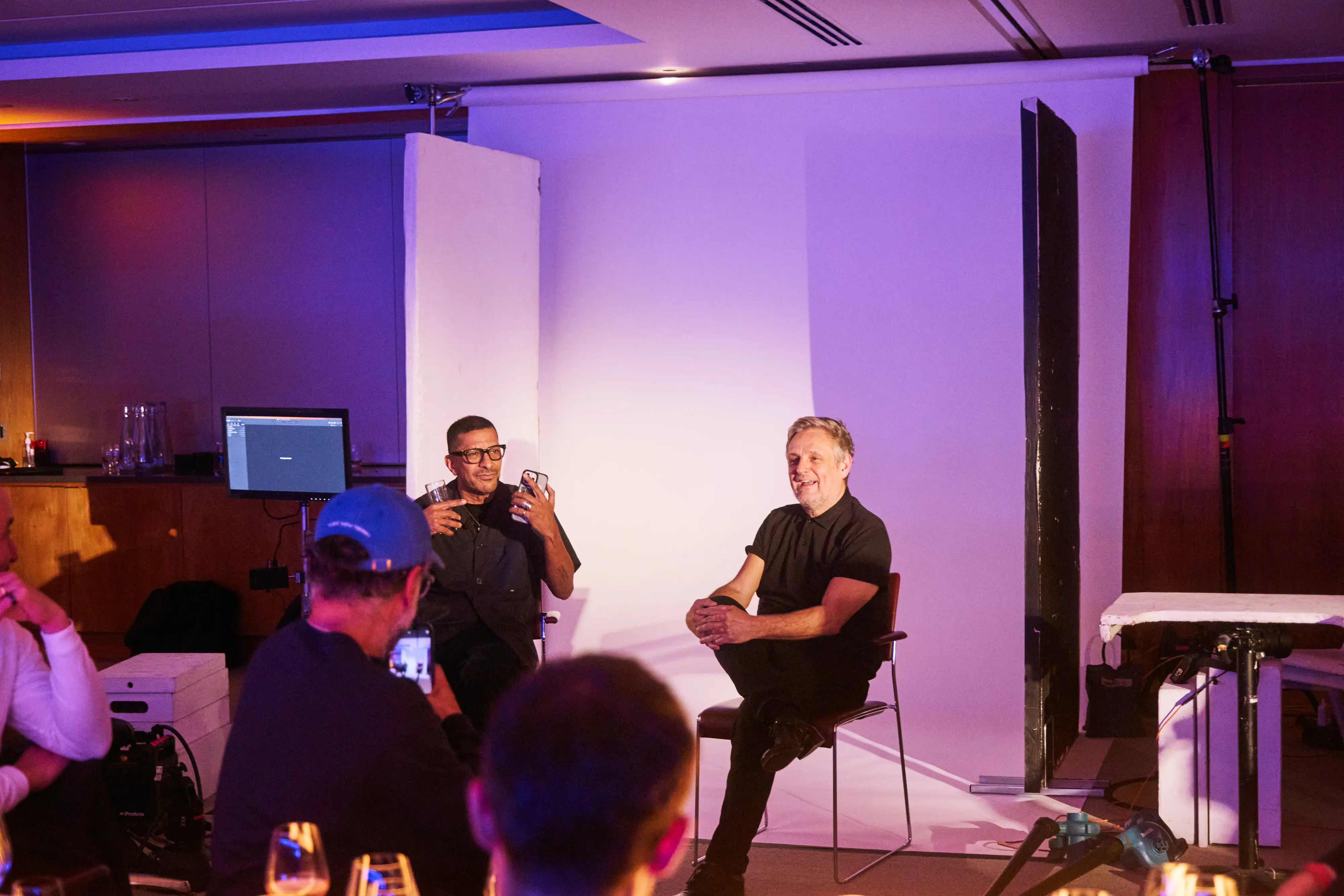
At Pentatonic’s recent gathering of consumer industry leaders to explore the future of commerce, legendary photographer Rankin and Raoul Shah of Exposure sat down to discuss the evolving relationship between creativity, technology, and authenticity. What began as a discussion about the anxieties surrounding AI shifted into something more generative: how technology can deepen emotional connection, extend the life of ideas and products, and surface the stories embedded within them.
From Imperfection to Regeneration
On an evening unwrapping technologies designed to enable multiple use-cycles for products, Rankin brought his own unique perspective on the concept of multiple use, the way value can be extended, rebuilt, or reinterpreted over time, whether in physical objects or creative work.
“When you take the secondary market for most products, you realise they carry memory and emotion. A pair of jeans has a story. You remember where you were when you wore them, and that story lives on. Now, we can embed that story directly into a product. Each item can carry its own biography.”
This idea of emotional durability mirrors a broader shift in how we think about design, materials, and creativity. Products are no longer static. They can carry a digital identity, a record of their past lives, just as creative work can retain the fingerprints of its maker even when transformed through AI.
The Premium on Authenticity
As AI accelerates production and blurs boundaries, Rankin discussed how authenticity will become increasingly valuable.
“People buy authenticity. They might buy luxury for desire, but what they’re really craving is something real. As AI narrows our connection with each other, authenticity is going to have such a premium. Real photography by real photographers will have a premium.”
In a world saturated with automated creation, human context becomes the differentiator. Whether in art or in commerce, the pieces that resonate will be those grounded in story, provenance, and intention, the elements that transform objects from products into experiences.

The Human Trace in Machine-Made Work
Rankin shared how he has begun using AI to reinterpret his own photography, exploring what happens when an artist feeds their work back into the machine.
“I’ve been putting my own work back into the machine and confronting it. After several generations, the image evolves into something new, but there’s still a trace of me in it. It’s still my image. My authenticity is within it.”
That idea of the human trace reflects one of the most compelling aspects of AI creativity: authorship does not disappear; it evolves. Technology can reshape form, but identity and intent remain embedded.

Shot by Rankin during the evening, Pentatonic's Co-Founder Jamie Hall, experiences his photo evolve through multiple use cycles
Ethics, Innovation, and Challenge
Rankin also spoke about the responsibility that comes with AI’s creative potential.
“With AI, you can change everything. You can make a person speak, move, or exist in a new way. The question isn’t what’s possible, it’s what’s right. The best work happens when you challenge the system, not when you let it agree with you.”
His perspective points toward a broader cultural shift. Technology becomes meaningful not when it imitates human capability, but when it is shaped by human principles, ethics, challenge, curiosity, and critical thought.
Watch the full Q+A video from The Future of Agentic Commerce Dinner, hosted by Pentatonic, Mastercard and Exposure, an evening built to explore how creativity, technology, and circularity intersect in the emerging era of multi-commerce.
At Pentatonic’s recent gathering of consumer industry leaders to explore the future of commerce, legendary photographer Rankin and Raoul Shah of Exposure sat down to discuss the evolving relationship between creativity, technology, and authenticity. What began as a discussion about the anxieties surrounding AI shifted into something more generative: how technology can deepen emotional connection, extend the life of ideas and products, and surface the stories embedded within them.
From Imperfection to Regeneration
On an evening unwrapping technologies designed to enable multiple use-cycles for products, Rankin brought his own unique perspective on the concept of multiple use, the way value can be extended, rebuilt, or reinterpreted over time, whether in physical objects or creative work.
“When you take the secondary market for most products, you realise they carry memory and emotion. A pair of jeans has a story. You remember where you were when you wore them, and that story lives on. Now, we can embed that story directly into a product. Each item can carry its own biography.”
This idea of emotional durability mirrors a broader shift in how we think about design, materials, and creativity. Products are no longer static. They can carry a digital identity, a record of their past lives, just as creative work can retain the fingerprints of its maker even when transformed through AI.
The Premium on Authenticity
As AI accelerates production and blurs boundaries, Rankin discussed how authenticity will become increasingly valuable.
“People buy authenticity. They might buy luxury for desire, but what they’re really craving is something real. As AI narrows our connection with each other, authenticity is going to have such a premium. Real photography by real photographers will have a premium.”
In a world saturated with automated creation, human context becomes the differentiator. Whether in art or in commerce, the pieces that resonate will be those grounded in story, provenance, and intention, the elements that transform objects from products into experiences.
The Human Trace in Machine-Made Work
Rankin shared how he has begun using AI to reinterpret his own photography, exploring what happens when an artist feeds their work back into the machine.
“I’ve been putting my own work back into the machine and confronting it. After several generations, the image evolves into something new, but there’s still a trace of me in it. It’s still my image. My authenticity is within it.”
That idea of the human trace reflects one of the most compelling aspects of AI creativity: authorship does not disappear; it evolves. Technology can reshape form, but identity and intent remain embedded.
Shot by Rankin during the evening, Pentatonic's Co-Founder Jamie Hall, experiences his photo evolve through multiple use cycles
Ethics, Innovation, and Challenge
Rankin also spoke about the responsibility that comes with AI’s creative potential.
“With AI, you can change everything. You can make a person speak, move, or exist in a new way. The question isn’t what’s possible, it’s what’s right. The best work happens when you challenge the system, not when you let it agree with you.”
His perspective points toward a broader cultural shift. Technology becomes meaningful not when it imitates human capability, but when it is shaped by human principles, ethics, challenge, curiosity, and critical thought.
Watch the full Q+A video from The Future of Agentic Commerce Dinner, hosted by Pentatonic, Mastercard and Exposure, an evening built to explore how creativity, technology, and circularity intersect in the emerging era of multi-commerce.
About the author
Jamie Hall is the Co-Founder and Chief Marketing Officer of Pentatonic. He directs the integration of customer experience with multi-commerce principles, ensuring that circularity is embedded across our platform, partnerships and programs. He previously held senior leadership roles at Nike and Levi’s, where he developed deep expertise in product design, brand communications, and customer innovation.

We’d love to show you exactly how our multi-commerce system works.
BOOK A DEMO
We’d love to show you exactly how our multi-commerce system works.
BOOK A DEMO
We’d love to show you exactly how our multi-commerce system works.
BOOK A DEMO
We’d love to show you exactly how our multi-commerce system works.
BOOK A DEMO
27 Downham Road Units 5–6
London, N1 5AA
UK
VAT: GB307379003
2140 S Dupont Highway
Camden, Kent, DE 19934
USA
VAT: GB307379003
GET IN TOUCH
PRIVACY POLICY

27 Downham Road Units 5–6
London, N1 5AA
UK
VAT: GB307379003
2140 S Dupont Highway
Camden, Kent, DE 19934
USA
VAT: GB307379003
GET IN TOUCH
PRIVACY POLICY
27 Downham Road Units 5–6
London, N1 5AA
UK
VAT: GB307379003
2140 S Dupont Highway
Camden, Kent, DE 19934
USA
VAT: GB307379003
GET IN TOUCH
PRIVACY POLICY
27 Downham Road Units 5–6
London, N1 5AA
UK
VAT: GB307379003
2140 s dupont highway
camden, kent, de 19934
Usa
VAT: GB307379003
GET IN TOUCH
PRIVACY POLICY
27 Downham Road Units 5–6
London, N1 5AA
UK
VAT: GB307379003
2140 s dupont highway
camden, kent, de 19934
Usa
VAT: GB307379003
GET IN TOUCH
PRIVACY POLICY