
§ Concept only · three exterior casings for one box · not a product
Pentatonic Labs Quartet
The whole company's AI, in one box, inside your building. Three ways it could look.
Concept only. Nothing here is a product, nothing has been built, and every figure is a design target. Pentatonic Labs · November 2026 · Read the write-up
§ 00 · Executive summary
Our approach
Three exterior concepts for the Pentatonic Labs Quartet. Different in spirit, built on the same brief, and all meant to be seen.
Built on the full brief
Every concept houses the fixed package: four compute sleds, fans, power and the controller. Each meets the airflow, heat, noise, servicing and security needs, and comes with a drawing that shows it can be built.
A subtle language of five
Pentatonic means five notes. The concepts carry it quietly: five glossy faces on the Plasma Cube, five rings of light on Abydos.
Alive, and standing for something
Light shows the company's knowledge at work. The form stands for keeping that knowledge inside a boundary: in your building, under your control.
Materials with texture and touch
Viable, recyclable materials, recycled aluminium throughout, finished to be felt as much as seen: black glass gloss, stone-like bead-blast, mirror and matte copper.
Shareable and premium
Each one is made to be photographed, talked about and shown off, at the standard of a flagship product.
A hard-working piece of the business
At home in an office, a store, a warehouse or a factory. Alive 24/7.
Plasma Cube
Knowledge held inside a boundary. Containment, knowledge, the future and information sharing, inspired by the contained energy of the plasma ball.
02Abydos
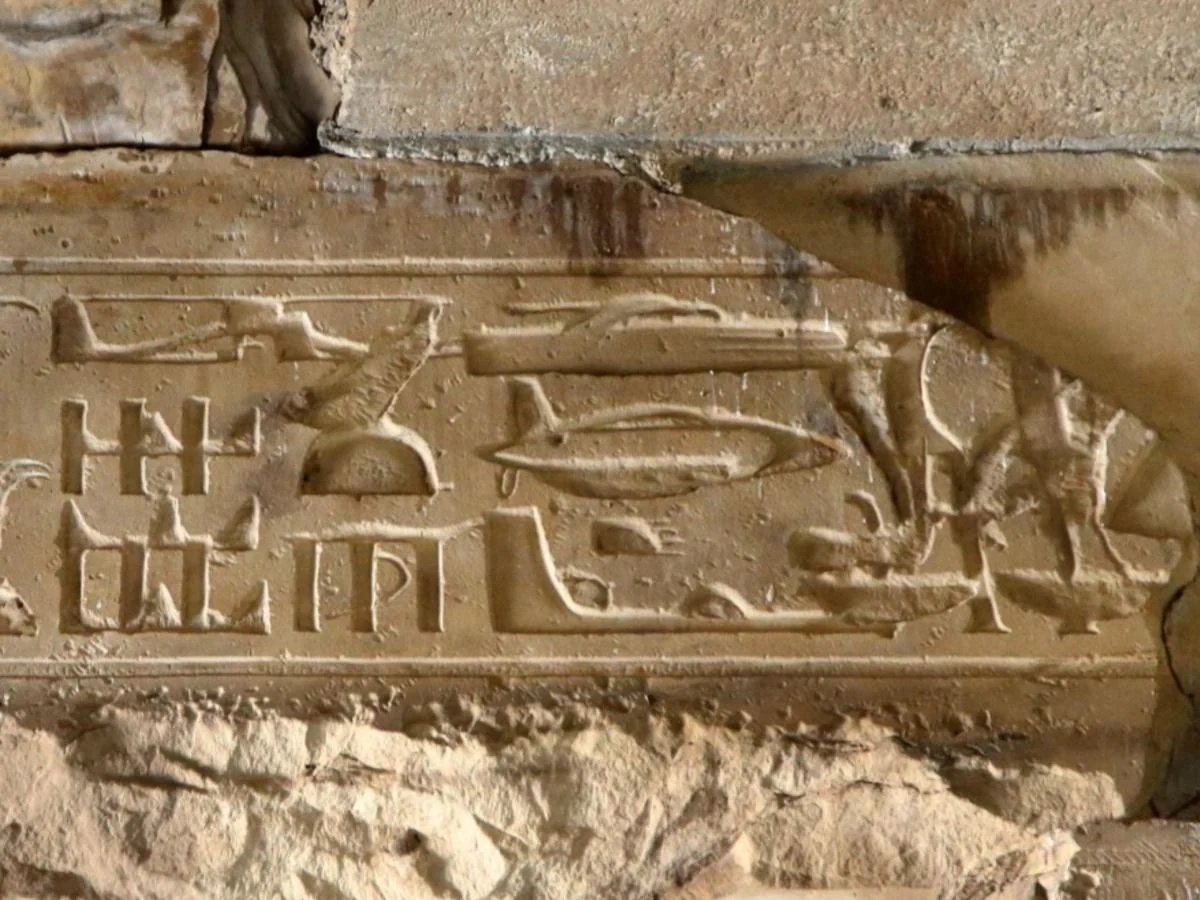
The future, carved in. The simplicity, curiosity and mystery of carvings made in the past about the future.
03Panel
Lit by the work. Made to fit someone's interior: minimal, sleek and unobtrusive, and still a statement piece.
§ 00.1 · Inside every concept
The package
The fixed package every concept houses: four compute sleds, fans, power and the controller.
§ 00.1 · At a glance
Design targets and estimates. Nothing here has been measured on hardware.
§ 00.1 · At a glance
§ 00.2 · Compute sled × 4
The superchip
Each sled carries one NVIDIA GB10 Grace Blackwell superchip: 128 GB LPDDR5X at 273 GB/s, 20 Arm cores, up to 1 PFLOP of FP4 (sparse) and a ConnectX-7 network interface at 200 Gb/s.
Storage and cooling
An 8 TB self-encrypting NVMe M.2 2280 drive sits on every sled. A vapour-chamber base with a liquid-metal interface carries the heat into a copper lattice heat exchanger. Blind-mate connectors join each sled to the midplane for power, 200G fabric and management. About 28 × 172 × 222 mm, with a tool-less pull handle and a white status LED on the rear face.
§ 00.3 · Midplane
A 200G fabric in one board
A midplane designed with Supermicro carries an embedded 200 Gb/s Ethernet switch: four sled ports, two external QSFP112 Link ports and a 10GbE uplink. The fabric network never touches the customer LAN.
Steward
A BMC-class controller: an ASPEED AST2600-class part running Supermicro firmware with a Redfish API, plus TPM 2.0 and a secure element. It sequences power per sled, runs a serial console to every sled, controls sensors and fans, keeps the chassis-intrusion log and drives the status light, the e-paper window and the support touch-point.
§ 00.4 · Two minds
A Quartet is two pairs of superchips. One pair is the fast mind. The other is the deep mind. Both are always loaded, so nothing waits for a model to start.
The deep mind holds a 763-billion-parameter DeepSeek model in a 203 GB pack, served across two superchips. The fast mind answers first: first word in about 0.2 s, even with background agents running.
Speed
Shared company context is computed once, kept warm in memory and spilled to 32 TB of NVMe, so the 300th agent of the day starts where the first one finished.
Built for hundreds of agents at once and over a billion tokens a day. That is a design target for a 100-person company, not yet a measurement.
§ 00.5 · Custom training
Learns overnight
At night the box studies the day and tunes the company’s own model. A new model replaces yesterday’s only if it passes the company’s own tests. In the morning the e-paper reports what it learned.
Those models belong to the company, in its building, and are never pooled.
§ 00.6 · Storage and vault
32 TB of NVMe in all: four 8 TB self-encrypting drives. The customer vault is 8 TB or more, mirrored, with snapshots on the other pair.
It is born encrypted. The key is made inside the secure element and has never existed anywhere else. The recovery key is split across three NFC key cards; any two restore it.
§ 00.7 · Sealed
- Homing
- Learns its home from its network fingerprint, a motion log and the chassis seal. Moved or opened, it seals itself until two cards are tapped.
- Tamper response
- Opened without a service unlock, it destroys its keys. Sleds release only on the Steward’s command.
- Forget
- Hold the ring and tap two cards: keys destroyed in under a second, with an erasure certificate.
§ 00.8 · Visible access
- Break-glass
- Three keys open a four-hour session. The note turns cool white and the e-paper names who is in.
- Egress gate
- The sleds have no route out. Everything leaving passes an allow-list and a signed ledger.
- Isolate switch
- A physical rear switch cuts the outbound path in hardware.
§ 00.9 · Checked
- Verify
- Every sled boots a fixed image it checks before starting, against a public release list.
- Post-quantum
- Hybrid ML-KEM and ML-DSA for key wrapping and the support channel.
- No radios
- No Wi-Fi, Bluetooth or cellular. NFC only, at a range of centimetres.
§ 00.10 · Power, cooling and size
An internal 1,100 W 80 PLUS Titanium power supply on one IEC C14 inlet. Estimated draw is about 120 W idle, 450–650 W in typical inference and about 900 W at peak.
Two 120 mm fans, with acoustic targets of 32 dBA or less at 1 m typical and 40 dBA or less at peak. The reference monolith is 136 × 336 × 280 mm, 12.8 L, about 11 kg. Each concept below is a different shell around this package.
§ 00.11 · Rear panel
- Network 10G
- The one cable the customer connects
- Link 1, Link 2
- QSFP112 200G, to join a second Quartet
- Service
- 1GbE out-of-band Steward access; off unless enabled
- Console, UPS
- USB-C Steward serial; USB-A to any office UPS
- Power, lock
- IEC C14, 100–240 V; Kensington-type slot
§ 00.12 · Configurations
| Duet | Quartet | Linked | |
|---|---|---|---|
| Superchips | 2 | 4 | 8 |
| Memory | 256 GB | 512 GB | 1 TB |
| FP4, up to | 2 PFLOPS | 4 PFLOPS | 8 PFLOPS |
| Arm cores | 40 | 80 | 160 |
| NVMe, raw | 16 TB | 32 TB | 64 TB |
A Duet upgrades in place: two sleds slide into the blank bays and the Steward re-forms the fabric.
§ 01 · Concept one
Plasma Cube
Knowledge held inside a boundary.
§ 01 · The story
All about containment, knowledge, the future and information sharing, inspired by the contained energy of the plasma ball.
Inspired by the plasma ball: a 360° LED display (polished, black-anodised recycled aluminium, laser-perforated with holes too small to see over a fine LED grid. It reads as black glass until it lights, and it stays metal, so it still cools, shields and contains).
It lights up with activity. The light can follow real users and teams, or simply illustrate. It shows that the knowledge is active and that Pentatonic Labs' models are always learning. Intensity rises and falls with how much the Quartet is being used.
- Finance
- Marketing
- Design
- Engineering
- Sales
- Operations
- People
Colour shows the team. The cube never names them.
§ 01 · Try it
Light
Drag to turn it. Concept visual; activity is simulated.
§ 01.1 · Material considerations
How we would make it
A 280 mm cube. The front, sides and top are separate display panels, each a 10 mm stack: perforated skin, light baffle, LED board, aluminium backplate. Panels screw to an inner chassis. The rear is the service face; the base is a matte vented plinth.
§ 01.1 · 2 / 5
What material
Recycled aluminium, 1.5 mm, polished then black-anodised for a glass-deep gloss. Holes of about 0.15 mm, laser-drilled at 2.5 mm pitch, vanish when unlit. No glass, no glue, one metal.
§ 01.1 · 3 / 5
How it would work
About 12,500 LEDs per face, 50,000 in all. A small display controller turns anonymous activity counts into the graph. Each face draws it as seen through that face, with brightness and size giving depth. A light sensor and schedule dim it at night.
§ 01.1 · 4 / 5
Why it is safe
Every face stays metal, so the shell is still the fire enclosure and an electrical shield. Nothing to shatter in transit. The display receives numbers, never text or data, so it can't leak. Panels sit inside the tamper seal.
§ 01.1 · 5 / 5
How it meets the brief
Air enters through the vented plinth on all four sides and leaves through the rear. LED boards bond to the backplate to shed their 40–60 W. Bigger, slower fans keep it quiet. Sleds slide out the back; each panel swaps with Torx screws. 22 L, stackable.
§ 01.2 · Pentatonic Labs Quartet
Plasma Cube: how it is built
All dimensions in mm · concept drawing, internal positions indicative · not to scale between details
Volume 280³ ≈ 22 L + plinth. Monolith today: 12.8 L.
Est. weight 14–16 kg.
Display ≈ 50,000 LEDs on front, sides and top; est. 40–60 W at office brightness.
Notes
- 1
Display skin on front, both sides and top: perforated skin, baffle, LEDs, backplate.
- 2
Polished, black-anodised recycled aluminium. Reads as black glass; still metal.
- 3
Pentatonic Labs wordmark with QUARTET beneath, matched to its width. Lit white, always.
- 4
Vented plinth: air in on all four sides, baffled as the base of the fire enclosure.
- 5
Two 120 mm fans in the front plenum, pushing air rearward.
- 6
Midplane and 200G switch, with cut-outs for air.
- 7
Four compute sleds, stacked flat, sliding out of the rear.
- 8
Copper lattice heat exchanger on each sled.
- 9
1,100 W power supply, venting through the rear grille.
- 10
Steward board: controller, TPM, secure element.
- 11
Display controller. Receives anonymous activity counts only, never text or data.
- 12
Rear service face: exhaust grille, ports, coral Isolate switch.
- 13
Cable exit: straight back, or down through the plinth.
- 14
Matte base: not lit, not glossy.
Open: thermal study at 900 W with a 40–60 W display load; fire-enclosure check on plinth vents and skin perforation; anodise gloss sample on recycled aluminium.
§ 02 · Concept two
Abydos
The future, carved in.
§ 02 · The story
The beautiful simplicity, curiosity and mystery of carvings made in the past about the future. The future is about accessing, uniting and unlocking knowledge in ways we don’t yet.
Inspired by the carvings at Abydos: a flat disc with the feel of temple stone, its only mark the Quartet name, cut into the top (recycled aluminium, coarsely bead-blasted and anodised a pale sand. The mark is engraved before anodising, so it is the same colour as the shell and shows only as light and shadow).
Five rings of light circle the wall, tonal and dim, the colour of the sand. Solid bars of light fly round each one, fast, at their own pace and in their own direction: different parts of the business, each with its own energy, sharing knowledge inside one boundary.
§ 02 · Try it
View
Light
Drag to turn it. Five rings · sharing inside the boundary. Concept visual; activity is simulated. Dimensions are design targets.
§ 02.1 · Material considerations
How we would make it
A 400 mm disc, 150 mm tall with its plinth: one metal-spun shell, machined to finish, the rear cut flat as the service face. Five 4 mm slits are laser-cut round the wall, evenly spaced from top to bottom, each backed by a diffusing light-guide ring clipped to the inner chassis. The mark is engraved 0.3 mm deep on top.
§ 02.1 · 2 / 5
What material
Recycled aluminium, 2 mm, coarse bead-blasted for a stone-like tooth that keeps a soft metallic sheen, then anodised a pale sand: tan, kept clear of pink. The light guides are a separate, clip-in recycled-acrylic part. No paint, no glue.
§ 02.1 · 3 / 5
How it would work
A ring of warm LEDs sits behind each guide, about 850 in all. A small controller turns anonymous activity counts into the speed, direction and brightness of each ring. The light is warm-tinted to match the anodise and dims at night.
§ 02.1 · 4 / 5
Why it is safe
The shell stays metal. The slits are closed behind by the light guides, so it still acts as the fire enclosure and an electrical shield. The rings receive numbers, never text or data. Matte anodise hides scuffs between leases.
§ 02.1 · 5 / 5
How it meets the brief
Air enters through the vented plinth all round and leaves through the flat rear. Sleds slide out the back; ports and the Isolate switch sit on the flat. The rings draw a few watts. About 17 L. It stacks, but won't rack or lie on its side.
§ 02.2 · Pentatonic Labs Quartet
Abydos: how it is built
All dimensions in mm · concept drawing, internal positions indicative · not to scale between details
Volume ≈ 17 L (Ø400 × 128 + plinth). Concept 01 cube: 22 L. Monolith: 12.8 L.
Est. weight 10–12 kg.
Rings ≈ 850 warm LEDs; est. 3–6 W at desk brightness, capped and dimmed by an ambient-light sensor.
Notes
- 1
One metal-spun shell, recycled aluminium, 2 mm. Coarse bead-blast, pale sand anodise with a soft metallic sheen.
- 2
Pentatonic Labs wordmark with QUARTET beneath, engraved 0.3 deep on top before anodising.
- 3
Five 4 mm light-ring slits at equal pitch, edge to edge. They stop at the flat rear.
- 4
Clip-in light guide, recycled acrylic, set 0.5 below the face. Turns the LEDs into solid bars.
- 5
Warm LEDs on a flex board and aluminium carrier ring, ≈850 in all. Driven by anonymous activity counts only.
- 6
Vented plinth: air in all round, baffled as the base of the fire enclosure.
- 7
Two 120 mm fans behind the front plenum, pushing air rearward.
- 8
Midplane and 200G switch, with cut-outs for air.
- 9
Four compute sleds, stacked flat, sliding out of the flat rear.
- 10
Copper lattice heat exchanger on each sled.
- 11
1,100 W power supply in the right wing, exhausting through the rear.
- 12
Steward board and ring controller in the left wing.
- 13
Flat service face: sled bays and lights, ports, coral Isolate switch, power.
- 14
Cable exit: straight back, or down through the plinth.
Open: thermal study at 900 W in 17 L; metal-spinning a Ø400 recycled-aluminium shell and cutting the flat rear; fire-enclosure check on slits and plinth vents; LED pitch and refresh for smooth bars; where the status light, e-paper window and support ring go on the curved wall.
§ 03 · Concept three
Panel
Lit by the work.
§ 03 · The story
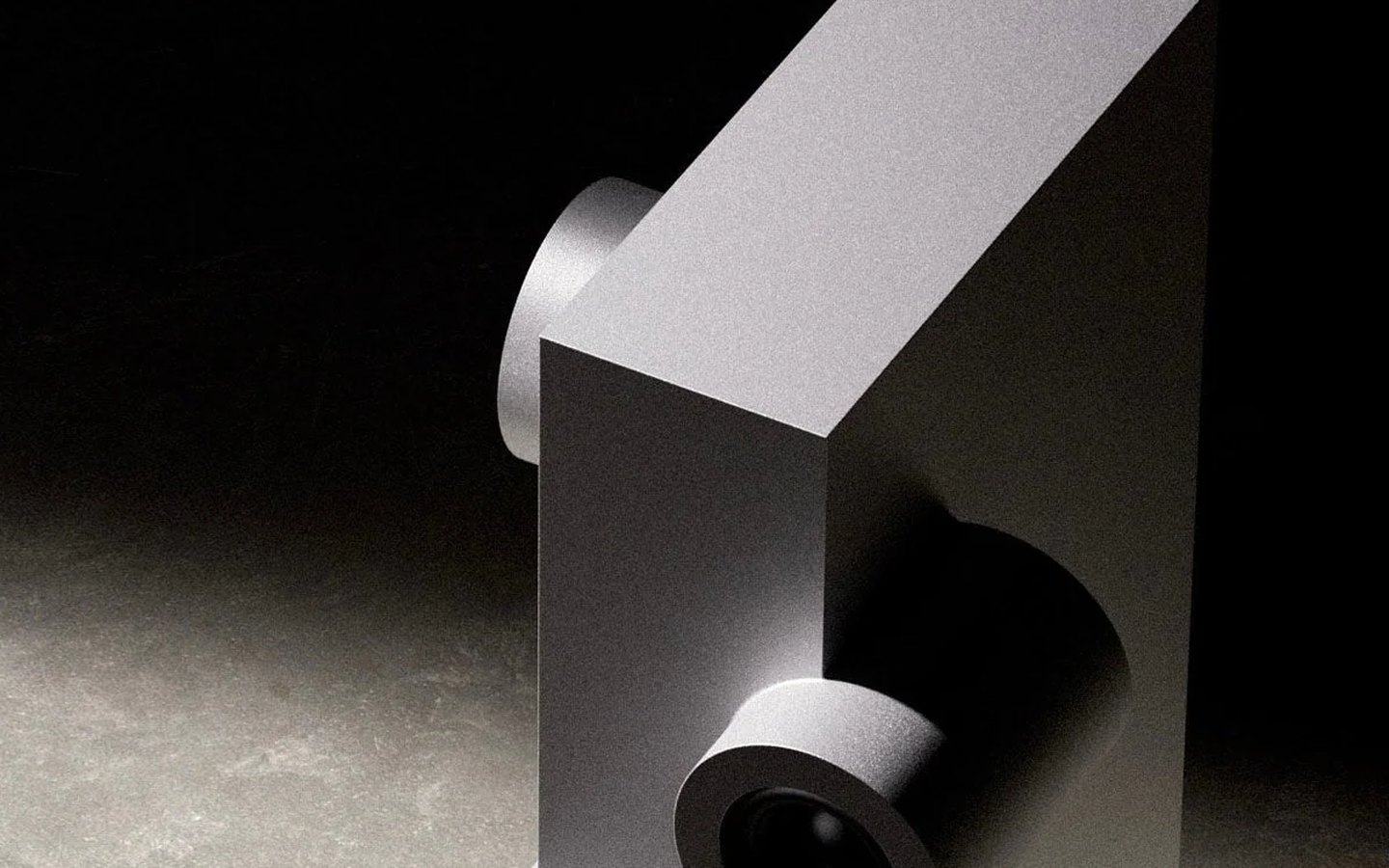
Made to fit into someone’s interior: minimal, sleek and unobtrusive, and still a statement piece.
Classic geometry for a box of GPUs: one plain, slim block, discreet enough to sit on a desk while you work (140 mm wide, as slim as four sleds standing on edge and two stacked 120 mm fans allow; 246 mm tall, 300 deep, about 10.3 L, on an 18 mm vented plinth).
Nothing else lights up. The Pentatonic Labs mark is the whole display: its colour follows how hard the company's AI is working, white at rest to leaf green at peak.
§ 03 · Try it
Finish
Form
Drag to turn it. Concept visual; activity is simulated.
§ 03 · Try it
Activity · Live
Light
§ 03.4 · Finishes and forms
Three finishes: one high gloss, two matte.
Mirror · Matte copper · Space grey
Standing · 140 W × 246 H × 300 D
Lying flat · 246 W × 140 H × 300 D
§ 03.3 · The mark
Activity, live
Up close: the mark is the only light, and its colour follows the work.
Perforated through the front plate, lit from behind by a light guide, eased between colours over seconds so it never flickers.
Nothing else lights up. The Pentatonic Labs mark is the whole display: white at rest, warming through sage to leaf green as the company works harder. Natural colours only, so nothing ever reads as an alarm.
How it lights
The mark is micro-perforated through the front face before it is finished, holes of about 0.15 mm, invisible until lit. Behind it sit a light guide and a strip of white and green LEDs, a few watts, driven from the Steward board.
What it says
One number, shown as colour: how hard the Quartet is working, from anonymous activity counts only. It eases between colours over seconds, never flickers. At night the same scale runs at about half brightness.
Open
Where the e-paper window, status light and NFC ring go if the front stays clean. How Support in and Isolate show. Setting the mark the right way up whether the box stands or lies flat.
§ 03.1 · Material considerations
How we would make it
A four-sided sleeve, bent and seam-welded, with a machined front plate and a rear service plate, all screwed to an inner chassis with Torx screws. The mark is laser-perforated through the front plate before finishing, holes of about 0.15 mm.
§ 03.1 · 2 / 5
What material
Recycled aluminium, 2 mm, in three finishes: mirror (bright-polished, clear anodised), matte copper (bead-blasted, copper-tone anodise) and space grey (bead-blasted, grey anodise). One metal, no paint, no glue.
§ 03.1 · 3 / 5
How it would work
Behind the mark, a light guide edge-lit by about 40 white and green LEDs. The Steward board turns anonymous activity counts into one number, and the mark eases from white through sage to leaf green as it rises. A light sensor and schedule dim it at night.
§ 03.1 · 4 / 5
Why it is safe
The front stays metal, backed by the light guide, so the shell is still the fire enclosure and an electrical shield. The mark receives a number, never text or data. Support in and Isolate show as a cool-white or coral edge.
§ 03.1 · 5 / 5
How it meets the brief
Air in through the plinth, through two stacked 120 mm fans, out of the rear. Four sleds stand on edge and slide out the back. About 10.3 L, under half the Plasma Cube. It stands on a desk, or lies flat on a second plinth variant.
§ 03.2 · Pentatonic Labs Quartet
Panel: how it is built
All dimensions in mm · concept drawing, internal positions indicative
Overall, standing: 140 W × 264 H × 300 D.
Body about 10.3 L.
Notes
- 1
Front plate. 2 mm recycled aluminium, machined, screwed to the chassis. Plain metal until the mark lights.
- 2
The mark. Pentatonic Labs with QUARTET beneath, about 84 mm wide, at the golden section. Perforated through the plate.
- 3
Light guide. Edge-lit by a strip of white and green LEDs; colour follows anonymous activity, white to leaf green.
- 4
Plinth. 18 mm, inset 8 mm, vented on all four sides: the intake. Cables can also exit down through it.
- 5
Front plenum. 70 mm deep, open to the plinth below, feeding the fans.
- 6
Fans. Two 120 mm fans, stacked: this sets the 246 mm height and the 140 mm width.
- 7
Midplane. With the 200G switch; cut-outs let the air through to the sleds.
- 8
Sleds. Four, standing on edge, 28 × 172 × 222, sliding out of the rear.
- 9
Heat exchangers. Copper, one per sled, in the main air path.
- 10
PSU. Internal 1,100 W, above the sleds, cooled by the upper fan.
- 11
Steward board. Controller; also drives the mark, a few watts.
- 12
Rear. Exhaust grille, Network 10G, Service, Link 1 and 2, USB-C, UPS, lock slot, coral Isolate switch, a light per sled.
- 13
Shell. Four-sided sleeve, bent and seam-welded; Torx screws, no glue, one sealed way in with tamper response.
- 14
Lying flat. Same internals; a second plinth on the long face, and the mark set horizontal at the factory.
Open: thermal study at 900 W in 10.3 L at 32 dBA or less; plinth intake area; fire-enclosure check on the perforated mark; where the e-paper window, status light and NFC ring go; mirror polish on recycled aluminium; LED tint against each finish.